


Pulmonary Services
- Home
- Pulmonary Services
Taking care of your respiratory health is key to a better quality of life where you can breathe more easily. At Unihealth SouthwoodsHospital, our Pulmonary Services Department is dedicated to accurately and safely diagnose and treat respiratory conditions such as the common cough, chronic asthma, Chronic Obstructive Pulmonary Disorder (COPD), and critical respiratory failure.
Our team, led by highly skilled pulmonary doctors, uses modern technology and medical techniques to provide life-saving interventions and long-term management for our patients.
Quick guide
Table Of Contents
Services Offered
Diagnostic Pulmonary Testing
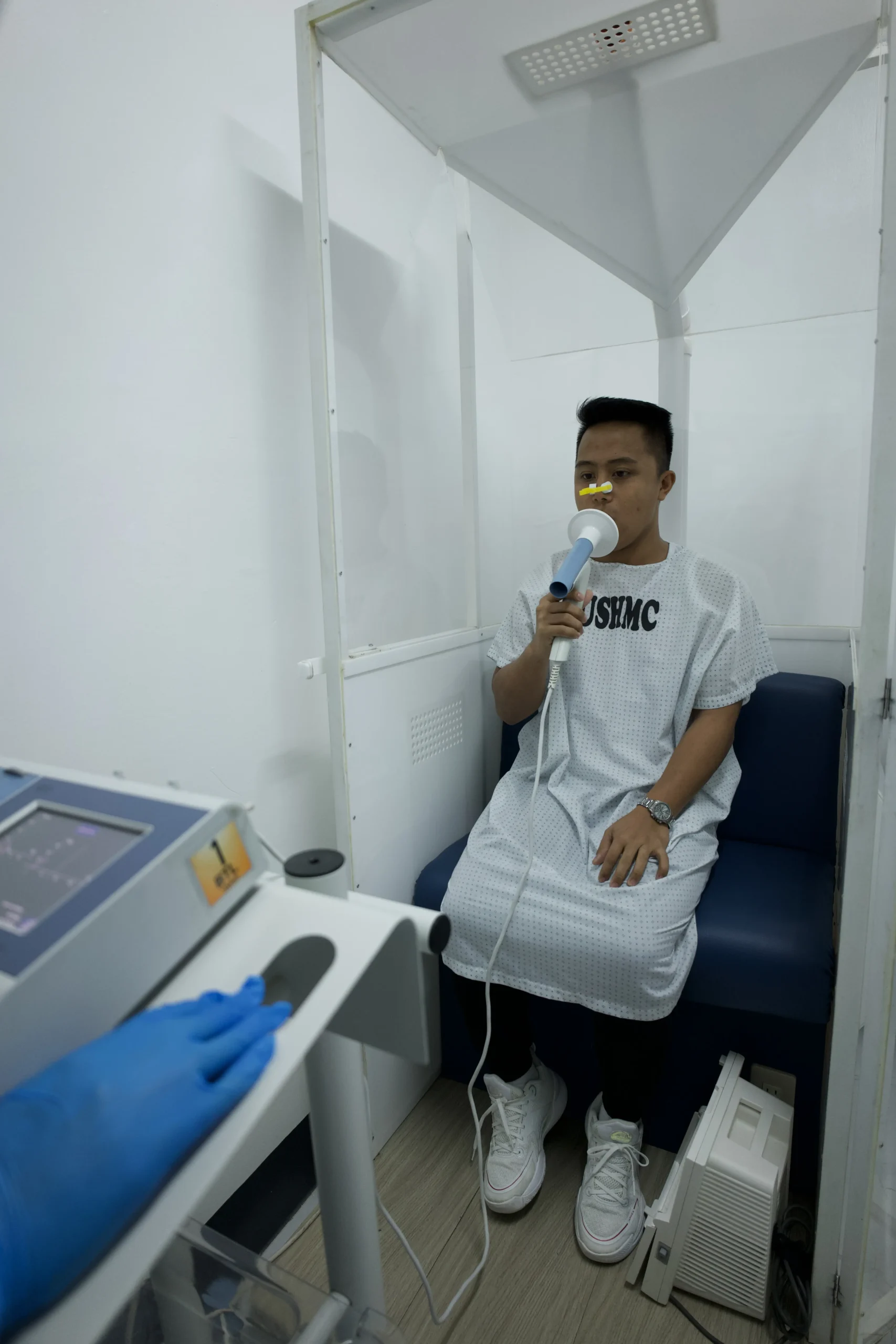
Accurate diagnosis is key to effective treatment. Our Pulmonary Services Department offers advanced respiratory diagnostic testing to evaluate your lung function and condition and measure your blood oxygen levels with precision and care.
Pulmonary Function Test (PFT)
This non-invasive respiratory diagnostic test measures how well your lungs are working such as with inhaling and exhaling air and how efficiently oxygen moves into the bloodstream. It plays a key role in diagnosing conditions such as asthma, chronic obstructive pulmonary disease (COPD), and pulmonary fibrosis.
Arterial Blood Gas Analysis (ABG)
This test evaluates oxygen and carbon dioxide levels in your blood as well as your blood pH balance. It gives important insights for patients who are experiencing respiratory distress or complex metabolic conditions.
Advanced Respiratory Services
We provide a comprehensive range of procedures and therapies designed to support our patients who have mild to advanced respiratory care needs.
Adult BiPAP (Bilevel Positive Airway Pressure)
The BiPAP machine uses two pressure levels — higher pressure during inhale and lower pressure during exhale — to support both inhalation and exhalation. This is ideal for patients who have more complex breathing requirements such as those with COPD or sleep apnea.
Adult CPAP (Continuous Positive Airway Pressure)
The CPAP machine delivers a continuous stream of pressurized air to keep the airways open during sleep. This is mainly usedfor treating sleep apnea by preventing interruptions in breathing, making sure that the patient is receiving enough oxygen while asleep.
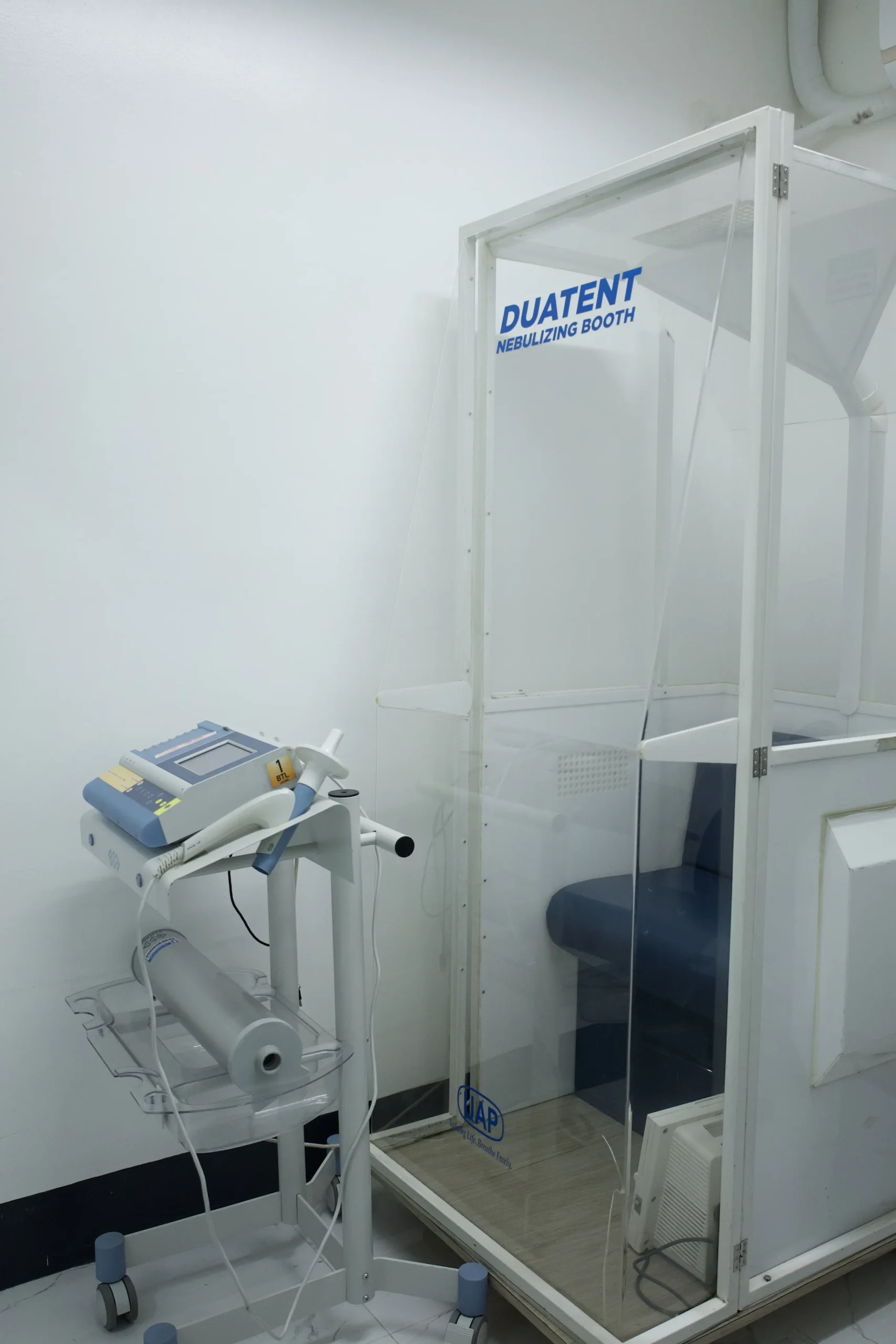
Aerosol Therapy (Nebulization)
Using a nebulizer, liquid medication is converted into a fine mist that is inhaled directly into the lungs. This allows for faster, targeted relief from bronchospasms and airway inflammation. This is typically used to treat respiratory conditions such as asthma, COPD, and cystic fibrosis.
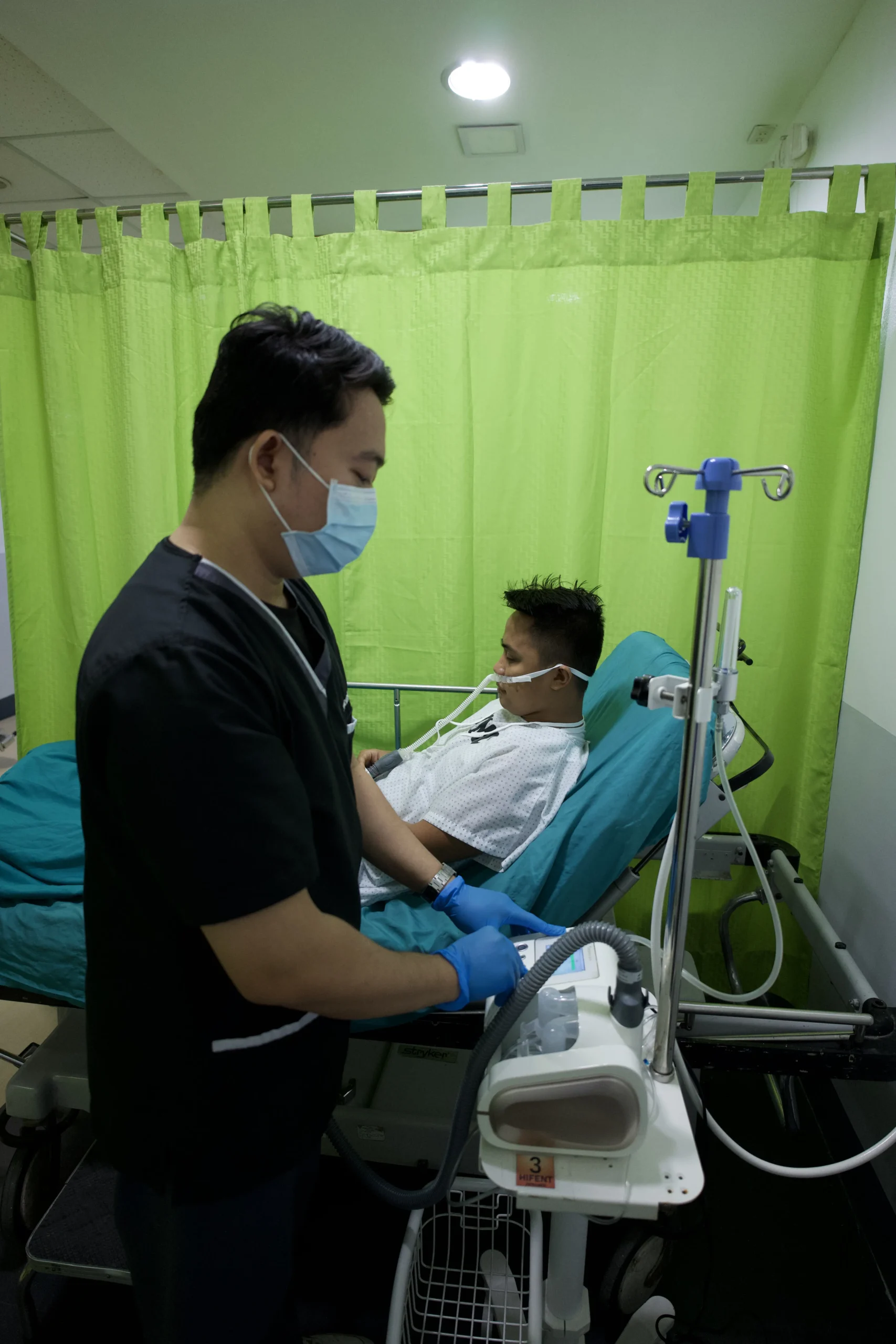
High-Flow Nasal Cannula Oxygen Therapy (HFNC)
This is a comfortable, non-invasive respiratory treatment method that delivers heated, humidified oxygen at high flow rates to improve carbon dioxide clearance. It is mainly used for patients that have acute respiratory failure.
Mechanical Ventilation
For patients who are unable to breathe on their own, our critical care team uses this as a tool to help them breathe by mechanically pushing air in and out of the lungs. This is typically used when a patient is in critical care due to severe respiratory failure. This can be used for neonatal, pediatric, and adult patients.
Incentive Spirometer Monitoring
Incentive Spirometer is a medical device that helps your lungs recover after surgery or a lung illness. Patients are guided in the use of incentive spirometers to promote deep breathing, improve lung expansion, and reduce the risk of post-operative complications such as pneumonia.
Specialized Respiratory Rehabilitation
After having respiratory illnesses or lung surgeries, recovery may require hands-on therapy to help clear the lungs and strengthen respiratory muscles.
Chest Physiotherapy Procedure
This procedure uses manual or mechanical techniques to loosen and drain thick lung secretions or mucus. Chest physiotherapy is very effective for patients with cystic fibrosis, bronchiectasis, or those recovering from prolonged bed rest.
Why Choose the USHMC Pulmonary Services Department?
At Unihealth Southwoods Hospital and Medical Center, we are committed to guiding you to better health through compassionate, patient-centered care. When you choose our pulmonary team, you will benefit from a collaborative and multi-disciplinary approach where your comfort, safety, and long-term well-being always come first.
Board-Certified Pulmonary Specialists
Every pulmonary doctor, nurse, therapist, and medical technologist on our team is board-certified and trained in the latest respiratory care protocols and techniques. Our specialists take the time to listen, educate, and partner with you to manage your lung health with confidence.
Holistic, Integrated Approach
Our pulmonary department team works closely with our cardiology, internal medicine, and critical care teams to make sure that your treatment plans are thorough and seamless. This allows us to care for your overall health, not just individual symptoms.
Cutting-Edge Technology
From advanced pulmonary function testing tools to the latest BiPAP and CPAP machines, we invest in modern technology to support you in recovering faster, give you accurate diagnosis, and improve your quality of life.
Helpful Answers
Frequently Asked Questions
When should I consult a Pulmonary or Lung Doctor?
You should consult a pulmonologist if you experience persistent cough (lasting more than 3 weeks), wheezing, unexplained shortness of breath, or chest pain when breathing.
What's the difference between BiPAP and CPAP machines?
Both are used for non-invasive ventilation but a CPAP machine (Continuous Positive Airway Pressure) uses only one, constant level of air pressure to keep the patient’s airways open and a BiPAP machine (Bilevel Positive Airway Pressure) uses two air pressure levels to help patients inhale and exhale.
Can I use a nebulizer at home or do I need to come to a hospital?
For many patients, a nebulizer is used for maintenance purposes. However, if a patient has acute asthma attacks or severe respiratory issues, they will need a stronger, hospital-grade Aerosol Therapy (Nebulization).
Are pulmonary tests and treatments covered by PhilHealth?
Yes, PhilHealth has coverage for pulmonary tests and treatments, especially for inpatient care. PhilHealth covers treatments for asthma attacks and pneumonia through their case rate system. They may also cover mechanical ventilation and oxygen therapy.